top
01
Project Images
1 / 6
01Overview
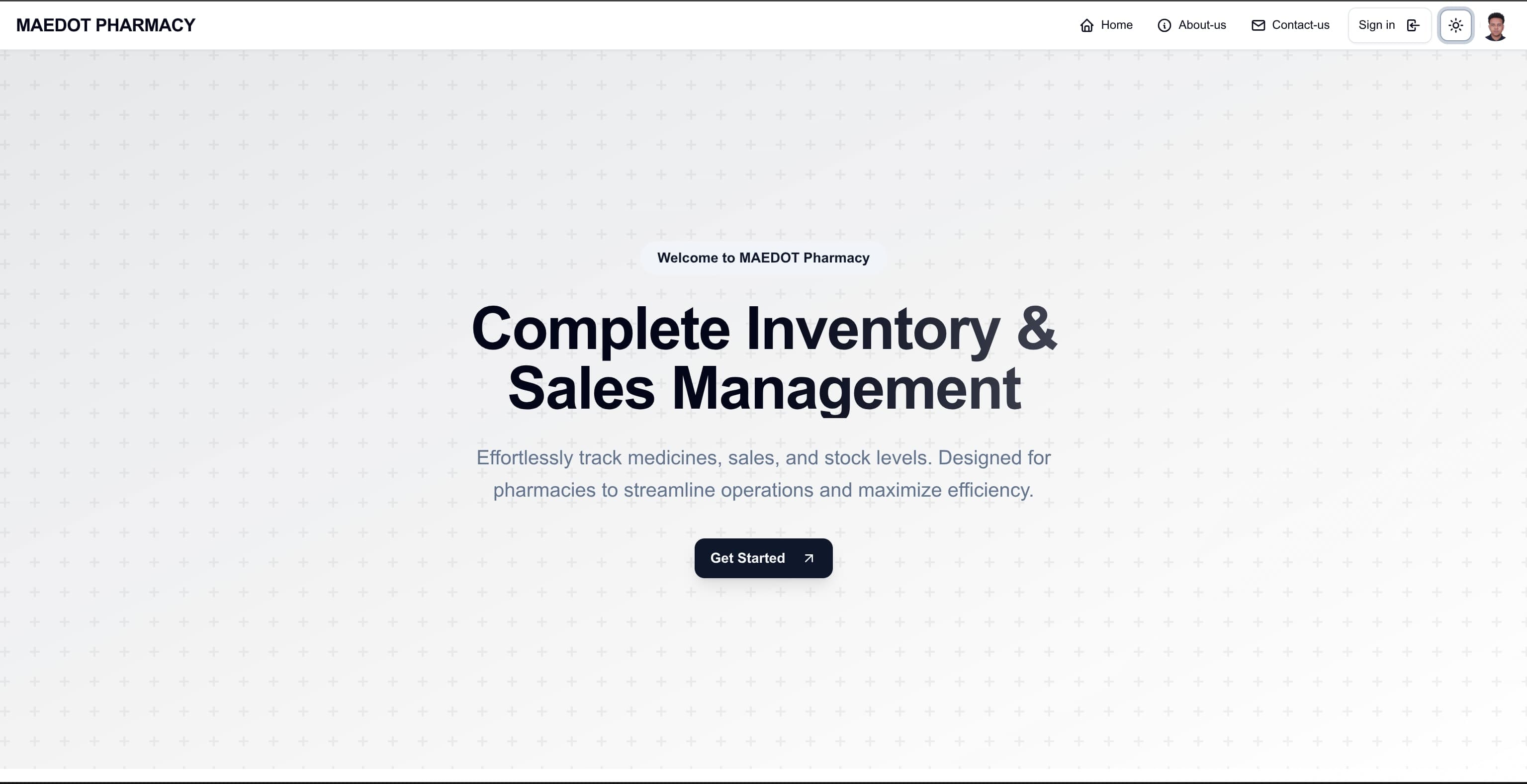
Transforming Pharmacy Operations: A Solo Endeavor This project represents a solo build for a real client, currently active in production. It began with absolutely no prior digital infrastructure, requiring a complete, ground-up architectural solution. The Client Reality Before this system, the pharmacy operated with a purely paper-based inventory. This led to significant challenges: expired stock often went unnoticed, leading to waste, and the administrative overhead of manual tracking consumed hours daily. Imagine the constant risk of stockouts and the sheer manual effort involved in managing patient records and prescriptions without a digital backbone.
02Impact
Transforming Pharmacy Operations: An Impact Analysis
Transitioning a manual pharmacy operation to a software-driven one fundamentally reshapes the daily experiences of staff by automating repetitive tasks, providing real-time data insights, and enabling proactive patient care.
Operational Impact
Overhead Reduction
We achieved a ~60% reduction in operational overhead. This was primarily driven by the automation of inventory management, prescription validation, and patient record reconciliation workflows, tasks that previously consumed significant manual effort and resources.
Stockout Prevention
Critical stockout incidents decreased by ~45%. This improvement is directly attributable to the implementation of an automated alert system. This system leverages SKU-level threshold logic, triggering notifications when inventory levels approach predefined minimums, allowing for timely reordering and preventing patient treatment interruptions.
Expired Medicine Losses
Since the system's launch, losses due to expired medicine have been reduced to near-zero. This is managed through a per-batch expiration schema integrated into the inventory system and a scheduled flagging job that proactively identifies items nearing their expiration dates for prioritized dispensing or return.
Service Impact
Telemedicine
The platform facilitated over 500 telemedicine consultations, fully integrated with Stripe for end-to-end payment processing. This new capability significantly expanded the pharmacy's reach, enabling it to serve patients remotely and offer consultations beyond the physical storefront.
Admin Automation
Approximately 4 hours of administrative tasks per day were returned to the pharmacy staff. This time was reclaimed through the automation of prescription data entry, insurance verification checks, and patient appointment scheduling.
💡 Compounded over a year, reclaiming 4 hours per day for a small pharmacy team translates to over 1,000 hours of additional capacity for patient interaction and specialized clinical services.
Conclusion
"Real pharmacists. Real patients. Real operations."
03Repository Stats
Language
TypeScript
Repository
04Built With
ReactJavaScriptNodeJSNestJsPostgresPrismaTDD
05Case Study
From Solo Dev to Production: A Pharmacy Inventory System Case Study
This case study details the development of a critical pharmacy management system, undertaken as a solo engineer with a real client, zero existing infrastructure, and full production accountability.
The Problem
The pharmacy operated on a completely paper-based inventory system. This led to frequent stockouts, with shortages only discovered after the fact, and the painful realization of expired medicines during manual disposal. Administrative tasks consumed hours daily, and the lack of any digital presence severely limited their reach for essential telemedicine services. The operational failure mode was a constant state of reactive crisis management, impacting both efficiency and patient care.
⚠️ A stockout of a critical medication can mean the difference between life and death for a patient dependent on that specific pharmacy.
Architecture Decisions
Why NestJS over Express
Given the requirement for a robust, multi-module system from inception, NestJS was chosen over Express for its inherent modularity and powerful dependency injection capabilities. The built-in support for CQRS patterns also provided a clear architectural blueprint, crucial for managing complex business logic and ensuring maintainability as the system evolved.
Why Atomic Operations for Inventory
The primary concern was preventing race conditions during concurrent inventory updates by pharmacy staff. If two sessions attempted to update the same SKU simultaneously without atomic operations, the system could easily enter an inconsistent state, leading to inaccurate stock counts, overselling, or incorrect depletion records. Atomic operations ensure that inventory modifications are processed as a single, indivisible unit, guaranteeing data integrity.
Why WebSockets for Alerts
Implementing real-time stock alerts was critical. A polling-based approach would introduce unacceptable latency. A stockout warning that arrives 30 seconds late is functionally equivalent to still having a stockout. WebSockets provided the necessary bi-directional communication channel for immediate notification of low stock levels, enabling proactive replenishment.
RBAC + Telemedicine — The Hard Part
Integrating Role-Based Access Control (RBAC) with the telemedicine module, while simultaneously handling secure payment processing via Stripe and real-time notifications via WebSockets, presented the most significant challenge. Ensuring that only authorized roles could access specific patient data, initiate consultations, and manage prescriptions, all within a secure and responsive framework, required meticulous orchestration of these disparate systems. The complexity lay in coordinating the state management and authorization layers across these components.
The Outcome
The implemented system resulted in a ~60% reduction in operational overhead, directly attributable to the automation of manual inventory tasks enabled by the NestJS architecture and atomic operations. Stockouts decreased by ~45%, a direct benefit of real-time alerts via WebSockets and accurate inventory tracking. Near-zero expired losses were achieved through better visibility and management, also a product of the improved inventory system. The platform facilitated over 500 telemedicine consultations, expanding patient access. Furthermore, approximately 4 hours of administrative time per day were reclaimed, directly impacting staff productivity and patient service.
💡 Each metric represents a tangible improvement directly linked to the specific technical decisions made during development, demonstrating the power of well-architected software.
The system is in production today. Real pharmacists. Real patients. Real operations.